
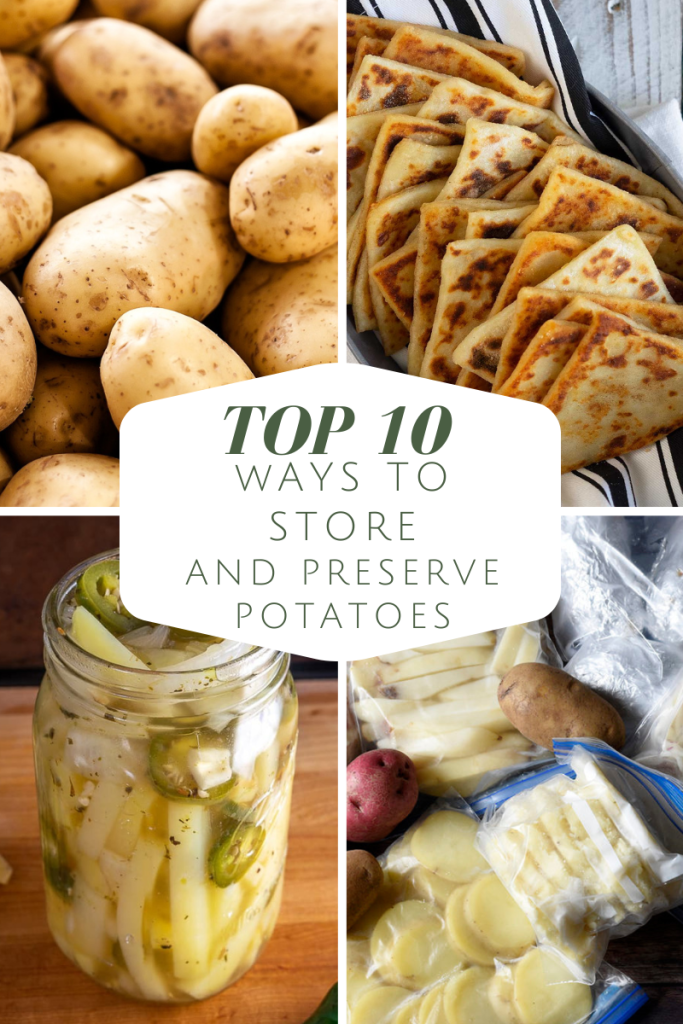
I think by now everyone knows we are in a major cost of living crisis. The cost of basics and necessities is starting to become out of pocket for many people who live from paycheck to paycheck and making the best use of bargains and special offers on basic ingredients is so very important. Part of doing that is knowing the best ways for you and your family or household to be able to store and preserve your haul/glut/extras.
As I write this I am aware that Aldi here in the UK is putting a price cap on their “Christmas Veg”, this means that they are only charging last years prices for them this year. This offer will be available from the 18th of December 2023. If you don’t live here but are aware of stores in your area doing similar things or you grow your own vegetables then this blog post I hope will give you some ideas or even reminders that there are different options out there for you.
Accordingly to last years prices this year we are able to purchase potatoes at Aldi here in the UK for 15p per 2Kg bag. That means for 90p (which is about the cost of a 2Kg bag normally) we can purchase 10Kgs. That’s alot. It gives us a wide scope for storing them and the ability to make alot of things ahead of time that are going to help us make life a little easier moving forward.
1. STORING FRESH
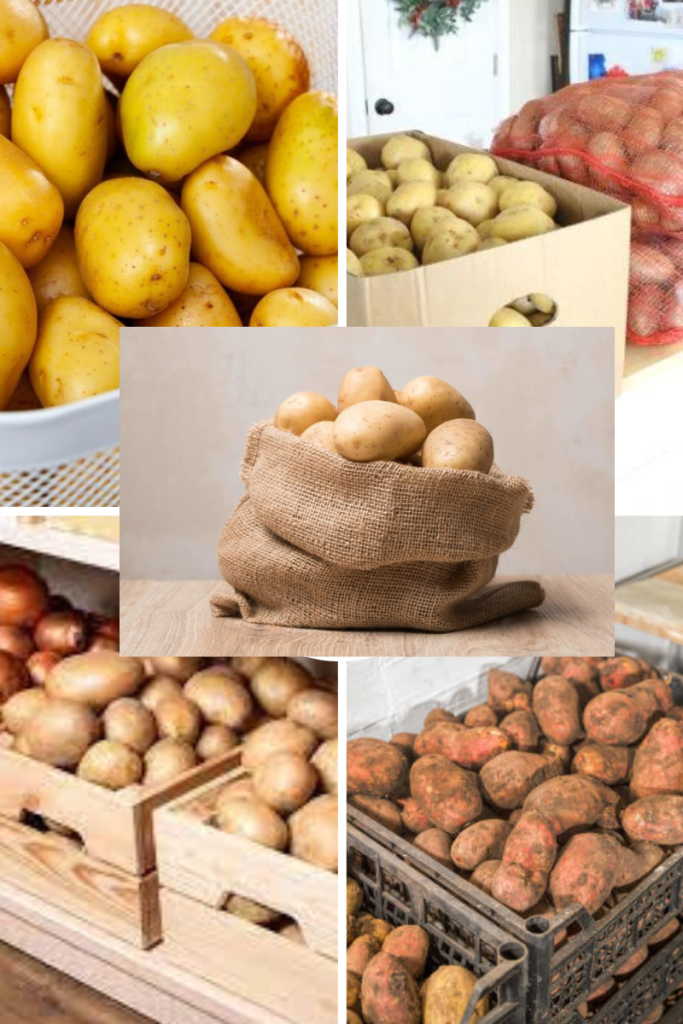
Storing our potatoes for use fresh is one of the easiest and cheapest forms of preserving. It means we can use them as and when we think about it and not have to think about storing premade items. On the flip side of that it means we have to think about and make time for what we are making at any one time. If we don’t have the money to put on the electric or gas meter then it can make life a little more difficult however it does give us a wider scope of what we make and when.
Typically to store your potatoes you want to have a dark and cooler space like a shed or cellar or if you are really lucky a root cellar. Storing your potatoes in wire or wicker baskets or even wooden crates, old plastic veg crates or if nothing else placing them in hessian sacks will will make sure that the potatoes have alot of air flow around them to keep them from “sweating” which will speed up the rotting process. I would not suggest using plastic totes or buckets for that reason either. Having proper airflow is incredibly important, fresh potatoes are a living and yes breathing plant and will indeed cause condensation, which then will sit or accumulate in the bottom of a closed tote or bucket, they will rot incredibly quickly and none of us want to put our hands in rotting potatoes.
If you have a shed or are placing your potatoes in a kitchen cupboard or even have them in the kitchen in their crate you will have to cover them. using heavy cloths like old table cloths, teatowels or hessian will make sure that your potatoes will stay in the dark happily. Potatoes if given too much access to the light will turn green and begin to sprout. Now while the green itself on potatoes is not poisonous as it is only chlorophyll however it may indicate toxins called solanine and chaconine which are not fun, these can cause extreme gastrointestinal distress. Saying that you don’t have to waste your slightly green potatoes as long as you peel and cut off the green bits well as that is where those toxins will collect any white potato left should be fine. obviously if the potato is completely green, chuck it in the garden so you can have new potatoes next year or in the compost heap.
2. Freezing Potatoes
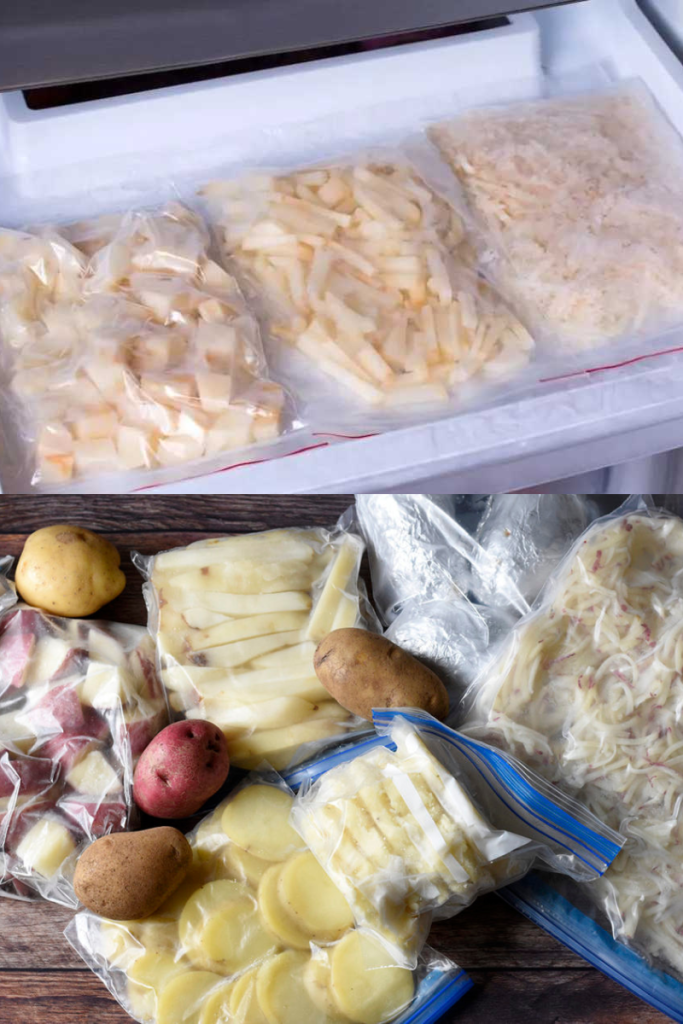
Rural Sprout – https://www.ruralsprout.com/freeze-potatoes/
Freezing potatoes takes a little more effort and in most cases we want to freeze them in the shape we want to use them. Blanching our potatoes or rather the potato shapes is going to be important as this helps with the freezing process and means the potatoes will not crack or go black or mushy once defrosted or the cooking process completed.
Blanching your potatoes means that once you have the shape you want, whether you want to make large dice, chunks, chips, fries, or wedges you pop them into a pot of hot water on the stove and bring them to the boil.
You then remove the potato and drop them into a bowl of iced water to stop the cooking process.
At this point the potatoes need to be drained and dried. I prefer a clean tea towel as when I do this I do alot.
Place your potato shapes on a baking tray in one layer and lay flat in the freezer until frozen.
At that point you can then place your potato shapes into whatever freezer bags or containers you choose to use and you are done.
Of course this is just about plain potatoes for use in whatever way you want when you decide how to use them. This does not include premade dishes which we will get into a little down the line.
3. Waterbathed Potatoes
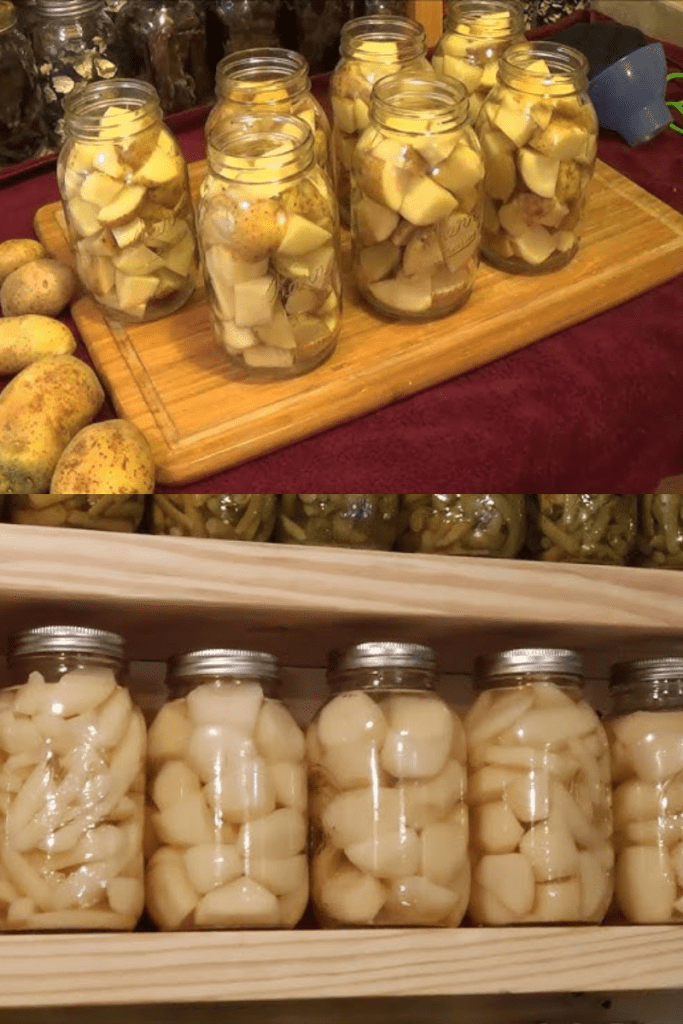
I live in the UK. Here waterbathing is a more popular way of “canning” foods. Along with many countries across the world in Europe, Eastern Europe, The Middle East, Asia, Africa and Australasia. It is my preferred way honestly and I have my own reasons for that. It is cheap, easy and can be done over a BBQ or wood fire and in a stock pot if that’s all you have.
There are two schools of thought when it comes to waterbathing potatoes. One is that you need to peel your potatoes and the other than as long as they are well washed and have no risidual dirt on them then you don’t have to peel. I do prefer if waterbathing to peel mine. The choice at the end of the day is yours. I prefer to peel them as we do not like the peels after water bathing. Also we tend to have alot of blemishes that need to be removed so by the time you’ve cut those off there’s not really alot of peel left anyways so we just peel them and save ourselves a step or two.
The 2 following links are to great videos on waterbath canning potatoes. Please be aware both of these videos are made in the US so they use predominantly a 2 piece lid system where many of us use the 1 piece “lug” lid. It’s the same process just you don’t have a ring to take off once they’re cool.
Also Pint jars are around 500ml and Quarts are 1 litre.
Michelle’s Garden video can be found here – https://www.youtube.com/watch?v=DiBvyWIO44w
MakeItMake video can be found here – https://www.youtube.com/watch?v=fyut1jiaric
I have chosen these 2 videos to share here as I haven’t gotten around to making my own as yet which is fine and these 2 videos show all you need to know in a friendly and informative way.
As Michelle says there is a war going on over social media about water bath canning but frankly we’ve been doing that for alot longer in alot more places than pressure canning and since we can do it safely if we follow all the steps then why shouldnt we be?
4. Dehydrating Potatoes

Sustainable Cooks https://www.sustainablecooks.com/dehydrating-potatoes/
Crave The Good https://www.cravethegood.com/how-to-dehydrate-potatoes/
Dehydrating is a process that not only take time but can take some equipment. Although some dehydrating can be done using the air dry method and some can be done using the oven. Air drying can take days sometimes weeks and oven drying can take up to 48 hours and I don’t know about you but I do not have the gas or electric to run that. If you are handy though and live somewhere where this could work well there is always using a solar oven and it does work incredibly well.
If you are going to be doing alot of dehydrating to perhaps invest in a good dehydrator. I would suggest if you are going to invest in one for use if you grow your own veg and fruit or make use of awesome offers like the one mentioned above then you need to get yourself a good catering quality one with a fan at the back. Not only do you not have to be there to change the shelves or racks around but it can be left going fairly safely while you go off and do other things. It also has a timer and a temperature control so you can be more accurate with your dehydrating.
No matter how you are dehydrating your potatoes there are a couple of things you need to think about and keep in mind when doing it.
- You need the freshest, most firm and least blemished potatoes.
- You need a pot on the stove that can fit a steamer basket in it or that you can removed the potatoes quickly and safely from blanching.
- Keep your pieces no matter your shape consistant. This will help to maintain the drying time across the whole product.
- Whilst preparing your potatoes keep the cut and ready ones in cold water to stop them going black.
- Blanch your potatoes pieces quickly in hot water and bring them out to plunge in cold water to stop the cooking process. If you miss this step your potatoes will go black during the drying process and although edible it just means they won’t be as nice when rehydrated.
- Dry on 50C or 125f for between 8-12 hours this will depend on the cut and size of your pieces and the strength of your dehydrator.
- If you are using a stackable style dehydtrator you will need to move the shelving after each hour to put the bottom rack to the top and the top to the bottom.
- Dry as much as you can. They drier the better. Potatoes have a tendancy to look a little like see through plastic once they are done.
- You need to keep them in an air tight container, jar or mylar bag afterwards and for extra security place oxygen absorbers in each container you use.
- For the next few weeks shake your jars or containers to make sure none are sticking to each other and there is no sign of moisture.
Dehydrating leftover mash potato for potato flakes is also incredibly easy, the only thing I would say is this. Don’t use this method if the potato already has butter or fats or cream or ANY dairy in it, this also includes vegan fats and dairy alternatives. These have a tendancy to go off and rancid, even when they are dried and will limit the shelf life of your product to a couple of months rather than several years without.
5. Fermenting Potatoes
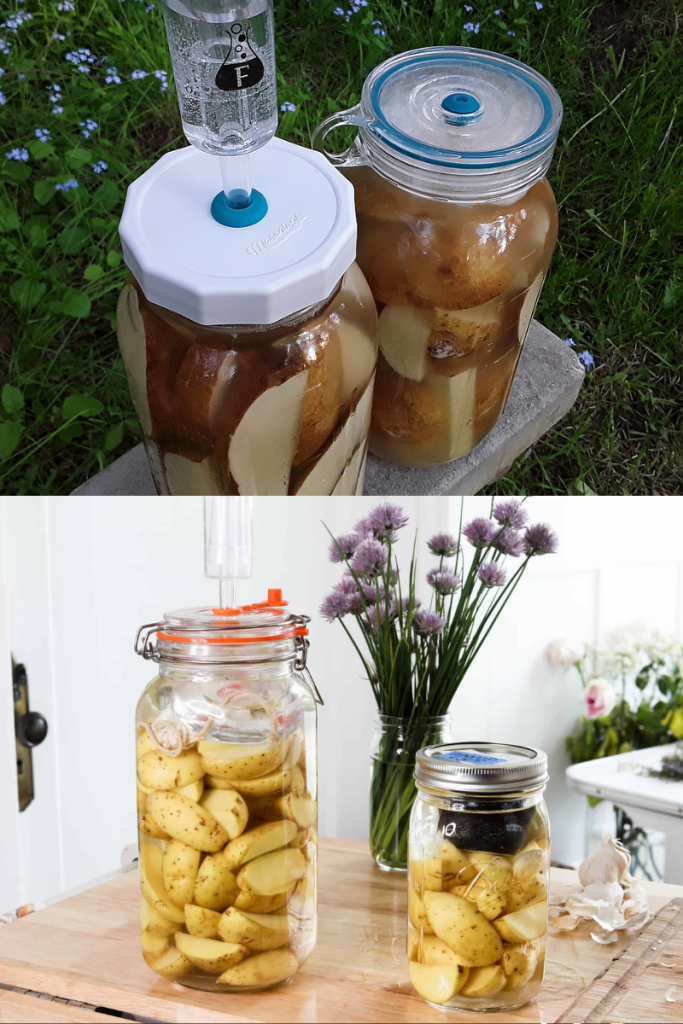
Wild Vegan Flower https://wildveganflower.com/fermented-potatoes/
Fermented Foods are a staple for me and I love them. Possible because I am a pickle fiend. There is something about that sour almost salt and vinegar flavour to the veg when fermented that really does appeal to my flavour senses. Then of course are the health benefits. Fermented foods are full of lactobacillus bacteria which are AMAZING for gut health and for those of us with digestive issues this is a must in the cupboard and on the table. Saying all of that I have never ever come across fermented potatoes before and it is definitely something I am keen to try and will do come the 18th.
I would suggest going and checking out this link to the blog post by the Wild Vegan Flower they have amazing info on there about them and also tips and recipes on how to cook with them afterwards because believe me when I say this … Fermented Potatoes still NEED TO BE COOKED before consuming. Potatoes are not really a veg you want to eat raw.
You can though use them exactly as you would any other raw potato, boil, mash, roast, deep fry, bake, make bread, all of the things. They do apparently taste like they have been already salt and vinegared which is right up my line of flavour favourites.
Like with anything though make a small amount if you aren’t sure. Try it several different ways before you make a final decision. Even try different lengths of time of fermentation apparently the longer you leave them the stronger the flavour and they can be fermented for between 3-30 days.
6. Pickled Potatoes
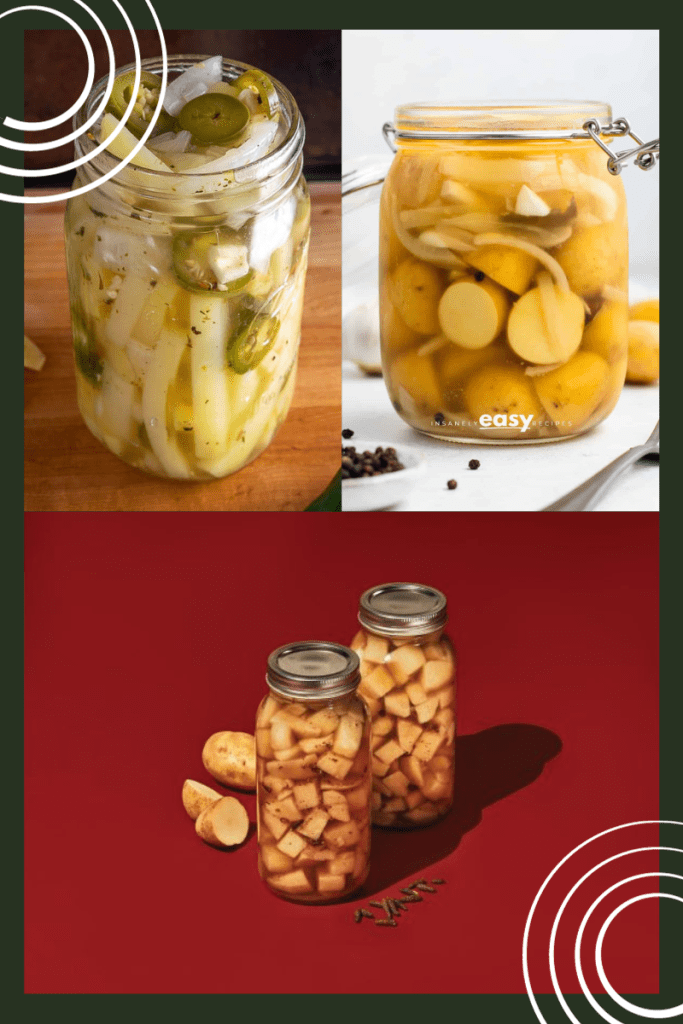
Mexican Please https://www.mexicanplease.com/pickled-potatoes/
Maple From Canada https://maplefromcanada.ca/recipes/maple-pickled-potatoes-with-dune-pepper/
I have to admit when I was researching different ways of preserving potatoes I never in my wildest dreams thought I could pickle them. Much like with fermenting potatoes I think most of us look at this idea and think “hmmm why didn’t I think of that ?”
Thankfully what I have found is that this method is fairly simple and for those of us across the world where pickling is a normal part of our pantry prepping we don’t need any fancy bits and pieces to put them up on the shelf.
Having said that these 3 recipes I have found from the US and the first state keeping them in the fridge because they don’t trust the pickle to do the preserving work like the rest of us. Looking at the recipe though I am pretty confident that I would be able to to just heat seal both of these and have them sitting on the pantry shelf happily without losing sleep. Once they are open though it’s up to you how you feel most comfortable. They wouldn’t last long enough here to go off once fully pickled so I would be happy to add them to the condiments for the table withut having them in the fridge.
The third recipe does have pressure canning instructions though and I would frankly pack the potatoes in the jars raw and water bath for 2 hours rather than the other. Again this is entirely what you are comfortable with and what you feel is a better option for you.
I for one will definitely be trying these out once the potatoes drop in price because if you want to experiment .. that’s the time to do it.
Insanely Easy Recipes – https://insanelyeasyrecipes.com/pickled-potatoes/#mv-creation-112-jtr
Mexican Please – https://www.mexicanplease.com/pickled-potatoes/
Maple From Canada – https://maplefromcanada.ca/recipes/maple-pickled-potatoes-with-dune-pepper/
7. Pressure Canned Potatoes
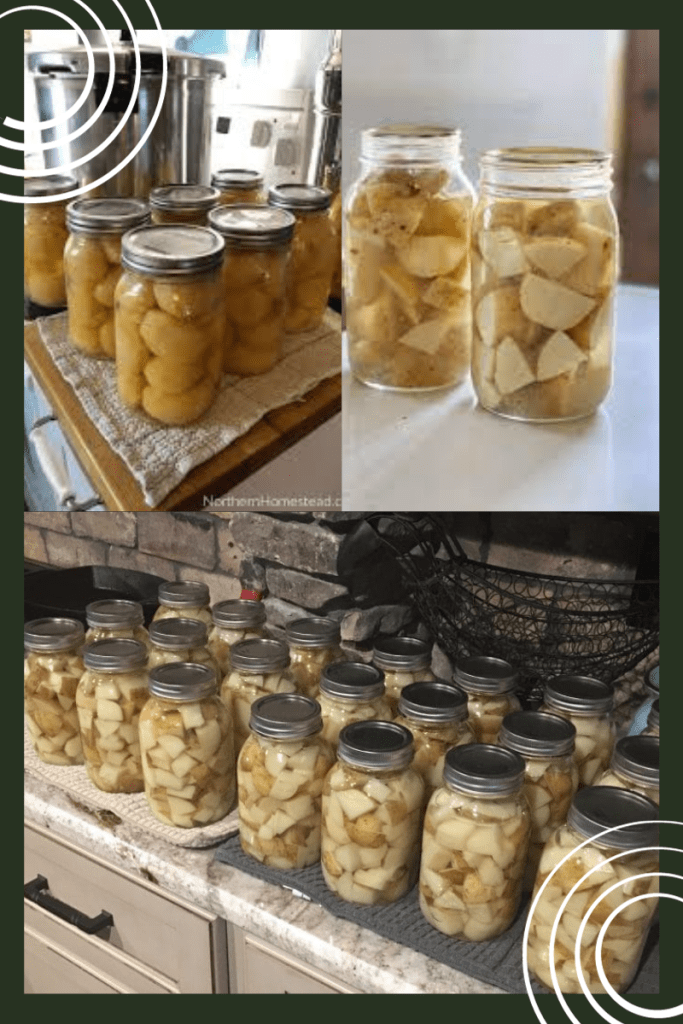
Lewis Acre Homestead – https://www.lewisacreshomestead.com/canning-potatoes/
Northern Homestead – https://northernhomestead.com/pressure-canning-potatoes-the-raw-pack-method/
Ok so here’s the truth of it I know absolutely NOTHING about pressure canning and probably never will. After a serious accident that nearly cost my youngest son and I our lives and several thousands of dollars worth of damage to our kitchen I don’t ever want to try again. Sure this was 25 years ago in Australia with a second hand pressure canner I found in a charity shop and had only books in the library to tell me what to do and pressure canners are alot safer now etc etc etc… but honestly the trauma and damage are done. I will never say never though so who knows what can happen in the future.
I know there are many of you out there especially in the US that ONLY pressure can so I felt the need to add it here into the blog and video. Needless to say it is not a very well used method world wide and is only just being used here in the UK.
There are many reason for that one of the main ones being the cost. The pressure canner itself is a massive investment and here can cost more than a weeks wages as many have to still be imported and those very few shops that sell them here are still having to cover that cost and the cheapest one I have found brand new is £400. This is not to mention the utensils, jars and lids.
However if you do pressure can or want to try and have the resources to do that then go ahead. I don’t want to stop you. There are 3 links under the picture and I will give you 2 links now to 2 videos on this topic done by people that I trust completely with their information.
Jenni’s Scratch Made Kitchen – https://www.youtube.com/watch?v=URSuSXP1Fic
Mouse Toes – https://www.youtube.com/watch?v=QSXuv17v2BM&t=45s
8. Side Dishes and Meals

Insane Good Recipes – https://insanelygoodrecipes.com/potato-side-dishes/
Cookist – https://www.cookist.com/6-potato-dishes-and-ways-you-can-properly-freeze-them-to-avoid-blackening-after-thawing/
There are literally millions of potato based side dishes you can prepare and freeze to finish and cook straight from the freezer. In the companion video to this I will show you Potato Croquettes and will include the recipe blog link here to that ….
Some of my favourites to make to freeze that save me time and effort are :- Potato Bakes, Duchess Potatoes, Hash Browns or Rostis, Croquettes (obviously), Cottage Pie, Hassleback Potatoes, Stuffed Potato Skins, Boulangere Potatoes… the list is literally endless.
The one thing about freezing premade potato dishes is making sure that your potatoes are partially precooked to avoid them going black. Whether you choose to use left over mash or boiled potatoes is entirely your choice but making sure that that starter cooking process is done is very important. Although eating potatoes that have gone black through oxidation isn’t dangerous it really doesn’t look great and can be quite offputting.
Another thing is to remember to make sure that your potatoes if boiled or steamed are well drained and preferably dried as they can take on alot of water vapour which crystalises within the veg and can cause a soggy wet mess.
Individual portions of sides like duchess potaoes and potato skins can be placed on a baking tray in the freezer first to freeze before placing them in a freezer bag or container. If freezing premade dishes like potato bakes you want to either use a glass dish with a silicon top or many layers of foil and plastic wrap but have them too on a flat surface with nothing on top to freeze before stacking. This of course is very important if using foil containers with paper tops.
Trust me many a frustrated and weird meal has ended up happening at our house due to those “helping” just throwing unfrozen dishes on top of each other, which then causes leakage and the containers ticking together… not fun … not fun at all.
9. Soup

Delish – https://www.delish.com/uk/cooking/recipes/a35792752/cream-of-potato-soup-recipe/
Inspired Taste – https://www.inspiredtaste.net/37881/potato-soup-recipe/
Gimme Some Oven – https://www.gimmesomeoven.com/potato-soup-recipe/
Ok this may seem obvious but honestly soups can be a game changer for preserving potatoes and having food in your fridge, freezer or waterbathed or pressure canned for the shelves.
As many side dishes there are there are as many potato based soups and I am completely sure you can come up with another 50 yourselves without a recipe book just by putting what you have in it.
If you are freezing I tend to put a cup per person in a baggie and lay them flat on baking trays to freeze and then store them like files in a filing cabinet on the floor of the freezer.
As you guys know I waterbath everything and for me I fill a jar no matter the size with the soup up to the collar and waterbath for 2 hours 3 if they have meat in them. That way I have a shelf stable and safe product to grab and go for food if and when I need it. So simple and saves space in the freezer which at the moment as I write this happens to be stuffed full of soup and frankly I either need to eat it or waterbath it cos Christmas is coming and we need the space!!!
10. Bread

Yes BREAD!!! Potato has been used for bread ever since they first came over from the Americas back in the 1500’s made more popular in the 1600’s but definitely a “thing”.
The starches in the potatoes were able to replace much of the more expensive grains like Barley, Spelt, Rye and the then known “Corn” which the hybridised variety is now known as Wheat.
The joy of making potato bread is that it can be made any way that you would make ordinary bread, you can make it as a flat bread as the traditional Irish Farls or as a sour dough or even with more modern yeasts.
Recipes for these are really easy to find and Pinterest is probably your best friend with those. It is also a great way to use up left over mash.
Below is the link to my companion video to this topic and I do hope you guys have a better idea of what you can do to store and preserve your potatoes to make the best use of special offers in stores or gluts from your own harvests.
 Bloo's Food